A Day Late, But Better Late Than Never
Sorry for the delay on this one. This journey has had more twists and turns than I expected, but I want to take you back to where these ideas really started—before HelixCloudOps, before the vision was clear, back when we were just trying to survive.
Today, I see AI everywhere. Overly simplified “agentic AI templates.” No-code AI application builders promising you can build the next unicorn in a weekend. “AI experts” selling playbooks that make it seem like you can just jump on the train and start printing money.
Don’t get me wrong—vibe coding is real, and it works for some people. But it’s not a fit for everyone. And it definitely wasn’t going to solve our problems in 2022.
This takes me back to that moment with Anshul I mentioned in Part 2. We had a vision. We had leadership support from Steph and Jared. We were ready to build something that would change how we worked.
We just didn’t know yet that we were four years too early.
The Problem We Couldn’t Ignore
When I was brought into cloud operations, I was supposed to lay the groundwork for what would eventually become the scalable operations model McDonald’s uses today. That was the plan. That was what I was hired to do.
But we couldn’t focus on it.
We spent more time putting out fires than building foundations. More time managing escalations than designing systems. More time reacting than creating.
So Anshul and I started asking: what if we could automate the repetitive stuff? What if we could give product teams the ability to execute simple infrastructure requests without waiting on us?
ChatGPT was at the forefront of our thinking. This was during the first year of the AI explosion—late 2022—and we saw the potential immediately. But our Global Security team? They weren’t having it. And honestly, I don’t blame them. I would have made the same call in their position.
So now what?
The Chatbot That Was Ahead of Its Time
Here’s where having direct access to AWS resources became our advantage.
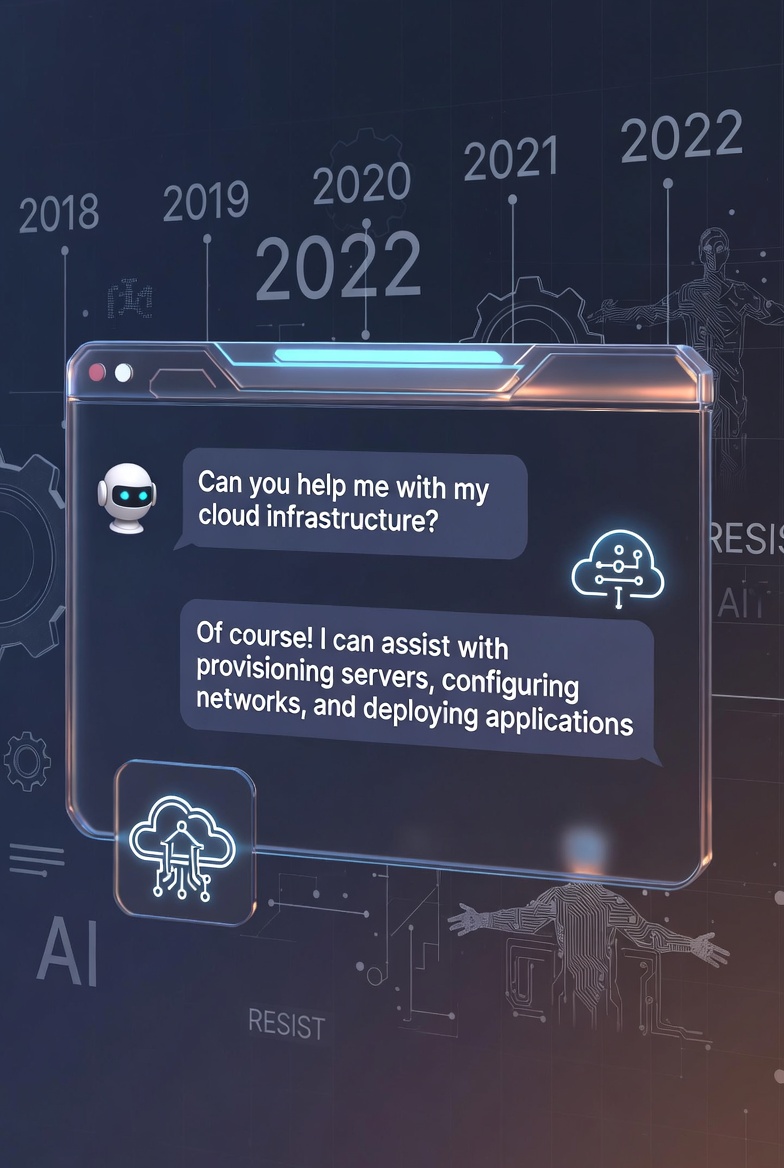
Anshul and I teamed up with our AWS partners and architected a chatbot that would take natural language requests, automatically fill out ServiceNow tickets with the correct parameters, and then invoke Terraform scripts to deploy infrastructure in product teams’ accounts.
The beauty of it? No back-and-forth. No manual ticket creation. But we still had the accountability trail through ServiceNow. Product teams could make requests in plain English, the system would handle the ticketing and automation, and everyone had visibility into what was happening.
It was elegant. It was innovative. It solved for both speed AND accountability.
Great idea, right?
Well, Anshul, Jared, and I thought so. But to be real? We were way ahead of our time.
The level of red tape around approvals was staggering. The pushback on accountability was immediate: What if a product team executes something wrong? Who’s responsible? The trust wasn’t there. The organizational readiness wasn’t there.
After months of drowning in escalations while trying to champion this project, we hit a wall.
Leadership’s verdict: “This is great, but no one will use it.”
The Gut Punch
That one hurt.
Punch to the gut, if you ask me. We’d put in the work. We’d built something genuinely useful. We’d solved a real problem. And the response was essentially: Thanks, but the organization isn’t ready for this.
It’s okay. Adapt and overcome. That’s what we do.
But here’s what happened next: instead of pushing the chatbot forward, we pivoted. We focused on scaling the team. We went from a team of 3 to a team of 10. We built automation using Terraform and ServiceNow that gave product teams self-service capabilities in a more traditional way—less AI, more workflows and scripts.
And honestly? That experience—building those automations, understanding how teams actually wanted to interact with infrastructure, learning what worked and what didn’t—that became the foundation I didn’t know I was building.
What I Didn’t Know Then
Looking back now, that 2022 chatbot wasn’t a failure. It was a prototype. A proof of concept. A glimpse into what was possible.
We just didn’t have the right timing. The right organizational buy-in. The right level of trust in AI systems.
But the technical foundation? The architectural patterns? The understanding of how autonomous systems could support DevOps teams instead of replacing them? All of that came from those months of building something the world wasn’t quite ready for.
I didn’t realize it then, but that chatbot was the DNA of what would eventually become HelixCloudOps.
It took a few more years. It took some unexpected detours—like building a platform for sim racing leagues (yeah, you read that right). It took watching AI evolve from curiosity to capability. It took seeing tools like GitHub Copilot change how developers actually work day-to-day.
But the foundation? That was laid in 2022, in a chatbot that “no one would use.”
Sometimes You Build the Future Too Early
If there’s one thing I learned from this experience, it’s that being right too early feels a lot like being wrong.
We had the right idea. We had the technical chops. We had leadership support. But the organization, the market, and the technology ecosystem weren’t aligned yet.
So we shelved the chatbot. We built the team. We created traditional automation. We did the work that needed to be done in 2022 and 2023.
And we waited.
Not intentionally. Not with some grand plan. But sometimes the best foundations are the ones you don’t realize you’re building until years later when you look back and think: Oh. That’s where this all started.
Next week in Part 4: “The GitHub Copilot Moment”—how AI went from banned curiosity to everyday development partner, and what that taught me about building the future of operations.
See you next week.
Brian Alvarez is the founder of AgenticFlowPro and HelixCloudOps, building the future of AI-powered cloud operations. Follow the journey on LinkedIn or subscribe to updates at agenticflowpro.com.